
Dear BTF Community,
What would you do differently if you could go through your business transition again?
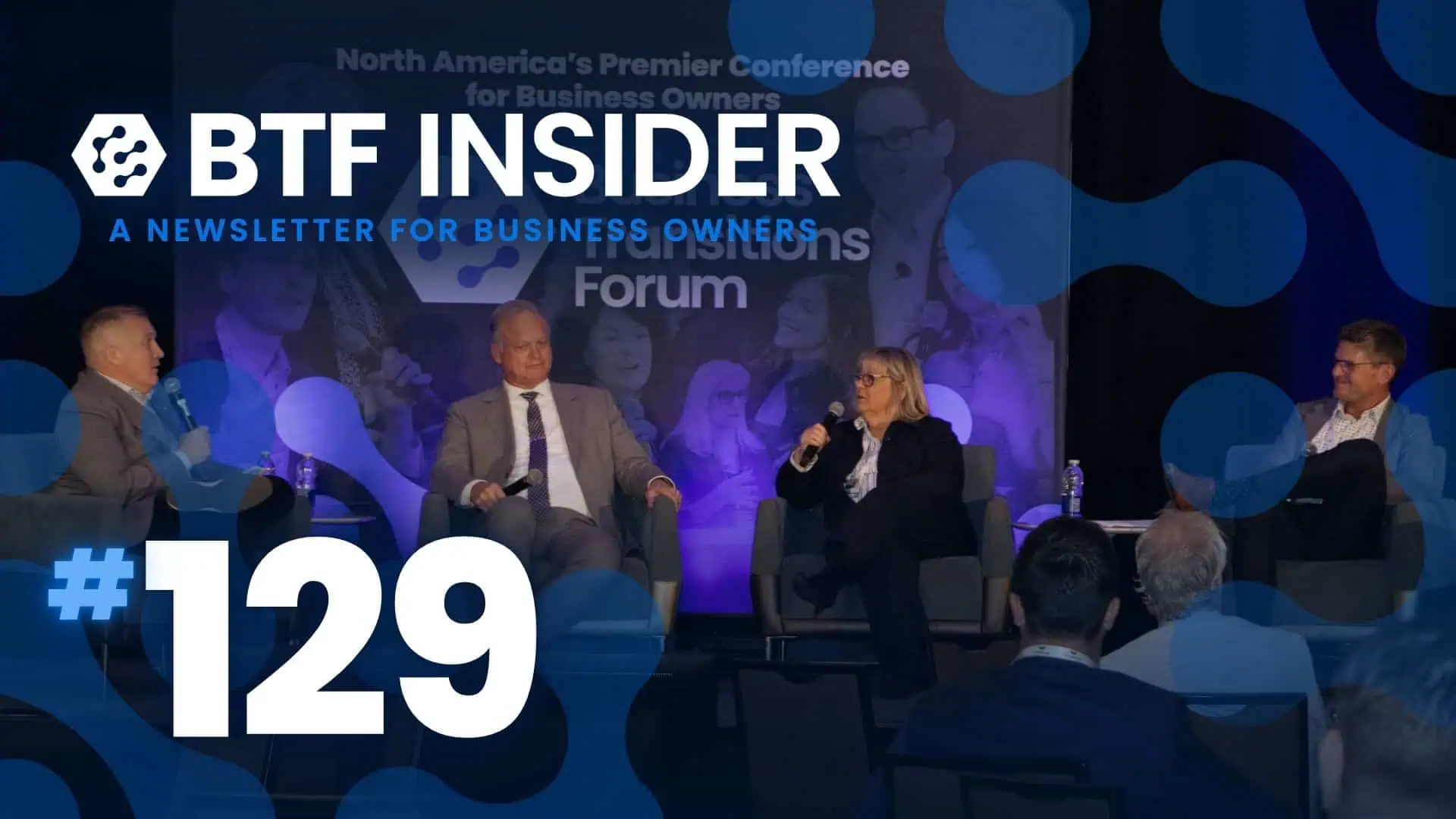
At BTF Winnipeg, Barb Gamey, Co-Founder of Payworks; Ron Jonkman, CEO of Allmar Inc.; and James Buhler, former owner of Wallace & Wallace, shared candid reflections on their ownership transitions, including the decisions they got right, the surprises they encountered and the opportunities that followed.
Moderated by Bram Strain, President & CEO of the Business Council of Manitoba, the conversation offered valuable lessons for owners preparing for their own next chapter.
Key Takeaways:
- Negotiate what matters early. Your leverage changes significantly once a deal is signed.
- Prepare your people. Even positive ownership changes can create uncertainty for employees.
- Define success beyond the sale. Consider what the transaction means for your business, your people and your future.
Enjoy,
Mark

Three Different Deals, One Defining Decision
What makes a business owner decide it’s time to sell, especially when selling was never part of the plan?
For three Winnipeg business leaders, the answer came down to different opportunities, changing priorities and a willingness to reconsider what the future of their companies could look like.
At Allmar, succession planning led Ron Jonkman and his management partners to complete a buyout in 2024, followed by an investment from Seafort Capital that allowed the team to retain an ownership stake.
For Barb Gamey, the decision challenged a vision she’d held for 26 years: keeping Payworks a multigenerational, family-owned business in Winnipeg. Yet growing cybersecurity demands, regulatory complexity and competition prompted her to explore outside investment.
Initially hesitant when European investor HD Capital approached, Barb was ultimately impressed by how well the firm understood Payworks.
“They had probably the best sense and reflection of us as a business.”
James Buhler, meanwhile, wasn’t looking to sell Wallace & Wallace when an international strategic buyer came knocking. After several approaches, the family agreed to explore a transaction.
As moderator Bram Strain drew out during the discussion, each owner arrived at a transition differently. Their experiences reveal how important it is to recognize when a new ownership structure could create opportunities that might otherwise remain out of reach.
The Decisions That Matter Before Signing
For Barb, protecting Payworks’ identity was essential. She negotiated commitments to retain its name, keep its headquarters in Winnipeg for at least a decade, prioritize local employment and maintain community investment.
The investor agreed to several requests she had expected to be difficult. Still, one concession left her with a lasting lesson.
“If there’s something that you want to nail down before you sign and they say, ‘Don’t worry about it. We’ll do it after signing,’ don’t buy that.”
Her advice was clear:
“Do it before signing because you have no leverage after you sign.”
Ron took a different approach to preparation, engaging an independent advisor to establish each management partner’s financial expectations before considering offers. This gave the group a shared understanding of what a successful transaction would look like.
“Set your goals first.”
James also stressed the value of experienced advisors when navigating due diligence and negotiations.
Across all three experiences, the lesson was consistent: establish your priorities before entering negotiations, while you still have the ability to protect them.
The People Behind The Transaction
When Bram asked what the panellists would do differently, employee communication emerged as a common theme.
At Payworks, only a small leadership group had been involved in the investment discussions. Despite careful preparations, Barb underestimated how employees would react.
“We really did underestimate the whiplash that staff would feel based on the announcement.”
For many, outside investment had never seemed a possibility, and the news raised questions about the company’s future.
James encountered similar concerns among long-serving Wallace & Wallace employees. His management team responded by gathering questions, listening to staff and communicating consistently.
At Allmar, Ron had made employee considerations central to choosing an investment partner. Seafort’s ambition to grow the company as a Canadian platform aligned with the management team’s priorities.
Their experiences highlight an often-overlooked responsibility: owners may spend months preparing for a transaction, while employees are expected to absorb the news in a single announcement.
Giving people clarity about what will change, and what will remain, can make a significant difference.

The Emotional Reality Of Letting Go
Bram also explored the personal side of transitioning a business, including the emotions that can accompany an otherwise successful deal.
For Barb, selling a stake in Payworks meant letting go of the family-owned future she’d spent decades imagining.
“I felt like I was in my loser era. I didn’t achieve what I thought I would achieve.”
Over time, she came to see the transaction differently, recognizing the opportunities it created for the company’s continued growth.
Ron described Allmar’s transactions as emotional roller coasters, particularly the management buyout, where the founding family’s attachment to the business added complexity.
James shared a practical lesson about keeping emotions from influencing negotiations.
“You don’t write a fiery email. You can save a draft and send it the next day.”
He also acknowledged the personal adjustment of no longer being associated with the family business that had shaped much of his career.
For owners, these reflections raise a question worth considering before closing: what will give you purpose when your relationship with the business changes?
What Comes After The Deal?
As Bram turned the conversation towards life after the transaction, the panellists reflected on opportunities they hadn’t anticipated.
For Barb, one of the most rewarding outcomes has been watching Payworks employees benefit from international collaboration, new expertise and professional development.
“The professional growth that has happened so quickly through the process has been really uplifting for a lot of our folks.”
James expressed pride that the business his family and employees had built attracted international interest.
“To have built a company with a team of people and a product offering that attracted attention from the other side of the world… I’m just really, really grateful to have been part of it.”
Ron found an unexpected interest in M&A itself and hopes to share what he’s learned with other business leaders.
Their experiences demonstrate how a well-considered transition can create opportunities beyond the immediate transaction, from developing future leaders to opening new possibilities for owners.
Final Reflection
As Bram’s discussion revealed, even experienced business leaders encounter surprises when navigating ownership transitions.
For Barb, the lessons centred on protecting priorities and preparing employees. Ron emphasized alignment among shareholders, while James highlighted the importance of trusted advisors and managing the personal realities of selling.
For owners considering their next chapter, their experiences offer a valuable reminder: define what success means before negotiations begin, communicate thoughtfully with the people who helped build the business and prepare for the opportunities that follow.
The decisions made before closing can shape the business, its people and its owners for years to come.