
Dear BTF Community,
Building a business often looks straightforward in hindsight. Growth milestones, new locations and successful exits tend to become the visible markers of progress.
Justin John and Eric Velez-Chua know the view from the inside usually looks different.
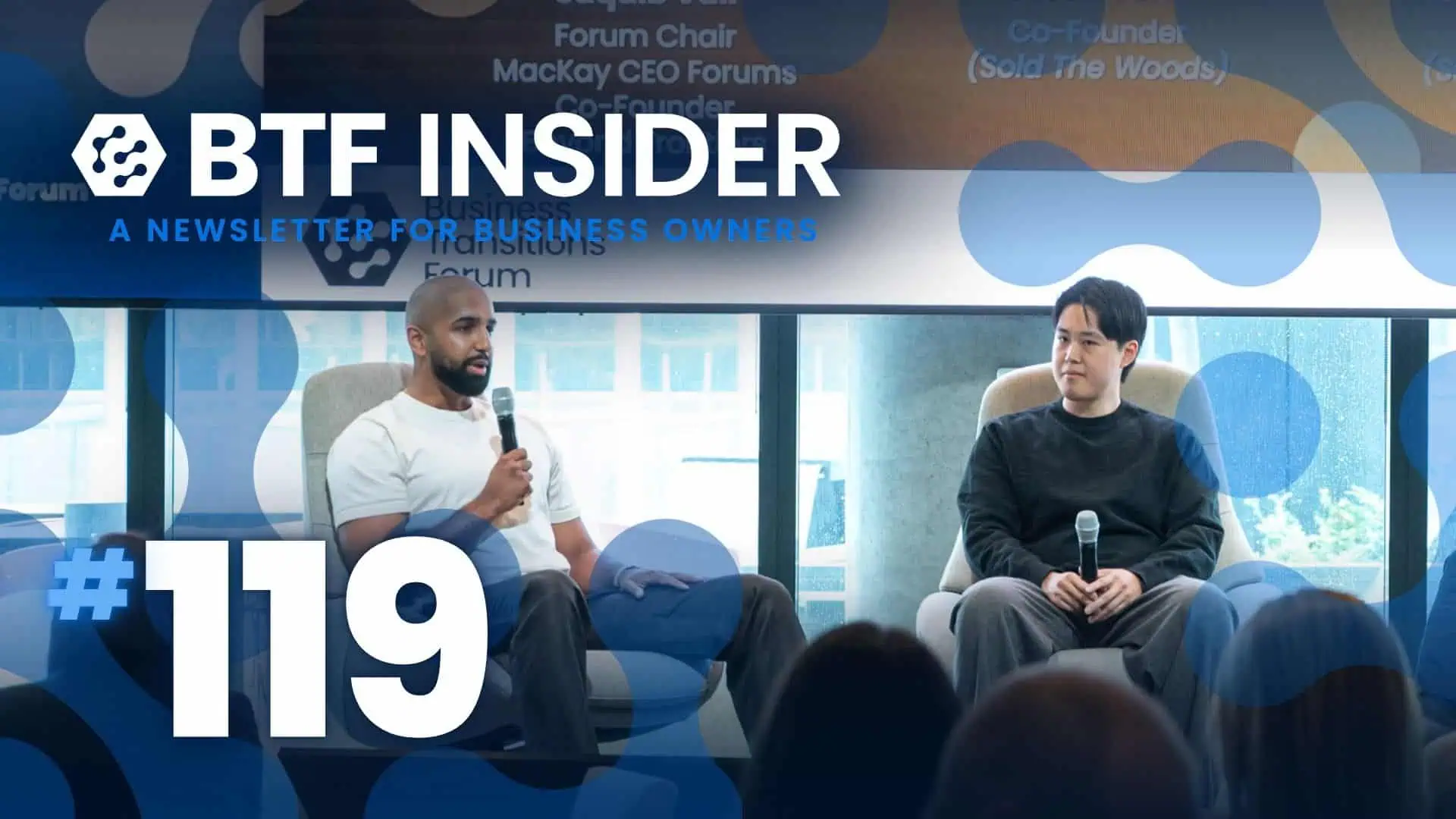
During their BTF Toronto session, the founders of The Woods reflected on the years between startup and exit, sharing lessons on leadership, partnership and the decisions that quietly shape long-term value long before a transaction ever takes place.
Key Takeaways for Business Owners:
- Transparency builds trust long before a business needs it.
- Leadership changes as companies grow.
- Activity and value creation are rarely the same thing.
Enjoy,
Mark

Strategy Depends On Where Your Industry Sits
One of the clearest insights from Joel’s experience is that not all industries behave the same way.
“Oil and gas is its own thing… probably the biggest difference moving into lumber is that there are still a lot of small providers and manufacturers, like the old days in oil and gas.”
Growth Creates Complexity Before It Creates Scale
Growth often arrives with assumptions attached to it.
More locations, more customers, more momentum.
The reality inside a growing business usually looks different.
“We were driving to Aurora and Mississauga in the middle of snowstorms to make sure we had cash so our inventory wouldn’t get disrupted the next day. Nights spent sitting in a car with Justin going through our cashflow Excel sheet to make sure we could make it for another week.” — Eric Velez-Chua
Opening multiple stores in a compressed period created opportunities but it also created pressure. Cash tightened, complexity increased and the systems that worked earlier started showing strain.
Those moments tested more than the business itself.
“I would say it actually probably brought us closer if anything… we realized we really had to work together to get through this.” — Eric Velez-Chua
Many businesses hit periods where momentum and stress arrive together. Those periods often reveal more than the years where everything feels easier.
Transparency Became Part Of The Operating Model
Very early on, Justin and Eric made a decision that felt uncomfortable.
They opened up the business to employees.
“We tried to build a business that was based on transparency and accountability.” — Justin John
That extended beyond broad updates or leadership meetings.
“We wanted all of our employees to act like owners… every quarter we would present to our team, here’s what our P&L looks like, here’s what profit’s looking like.” — Justin John
The approach worked well during growth but its real value became apparent when conditions became harder.
“It felt kind of odd in the beginning to open up your books… but that honestly got us through some of those tough times.” — Justin John
In an industry filled with headlines about businesses shutting down, employees could see the full picture.
Trust had context.
Transparency became less about communication and more about alignment.

Leadership Has To Change Faster Than The Business
Founders often build early businesses through sheer effort. Energy fills gaps, problems get solved quickly and presence becomes leadership.
Eric recognized that it eventually stops working.
“At the start, you can get by, by bringing energy, fixing everything and always being around.” — Eric Velez-Chua
As the business grew, a different approach became necessary.
“You’ve got to set up the systems and decision-making rhythm so the business can run without you.” — Eric Velez-Chua
Many owners eventually reach this point. The instinct that helped create the business can quietly become the thing slowing it down.
Scaling often requires founders to step further away from decisions they once sat at the centre of.
Exit Conversations Started Earlier Than Most Expect
Many founders begin thinking about buyers once they decide they are ready to sell.
Justin and Eric started years earlier.
“We established relationships with our eventual buyer three months into opening our business.” — Justin John
Those conversations were not transactional. They were part of understanding where the market was moving and what opportunities might eventually exist.
“We had a perspective that we always needed to evaluate opportunity costs.” — Justin John
When they ultimately sold, the decision reflected several factors coming together at once.
“We realized the market was getting to a place where we needed a different set of cards to continue to grow. We realized we weren’t the best people to bring it forward longer term.” — Eric Velez-Chua
That level of self-awareness can be difficult.
Founders often feel pressure to believe they should be the person leading every chapter of a business. Knowing when someone else can take it further requires a different kind of confidence.

Success Looked Different Afterwards
The sale created that initial excitement, then the perspective started to shift.
“Almost our definition of success has changed from the exit.” — Eric Velez-Chua
Earlier in the journey, success was straightforward.
Build the company. Grow it. Sell it.
The questions now look different:
“How do you pick the right markets? How do you pick the right teams? How do you pick the right roles for ourselves?” — Eric Velez-Chua
Justin framed it another way.
“We started to realize, both being athletes in our past lives, that this is a sport and we want to see how far we can take it.” — Justin John
The finish line moved.
Final Reflection
The Woods became an eight-figure business but the lessons from the journey reach further than revenue or exit value.
Trust created resilience, leadership evolved with scale and strong relationships carried the business through periods where spreadsheets and forecasts alone weren’t enough.
The exit may have been the visible milestone but much of the work that made it possible happened years earlier.