

Dear BTF Community,
For many prairie business owners, global instability can feel distant. Tariffs, geopolitical tensions, supply chain disruptions and social media activism can often seem like issues for multinational corporations, not local SMEs.
Grant Kook sees it differently.
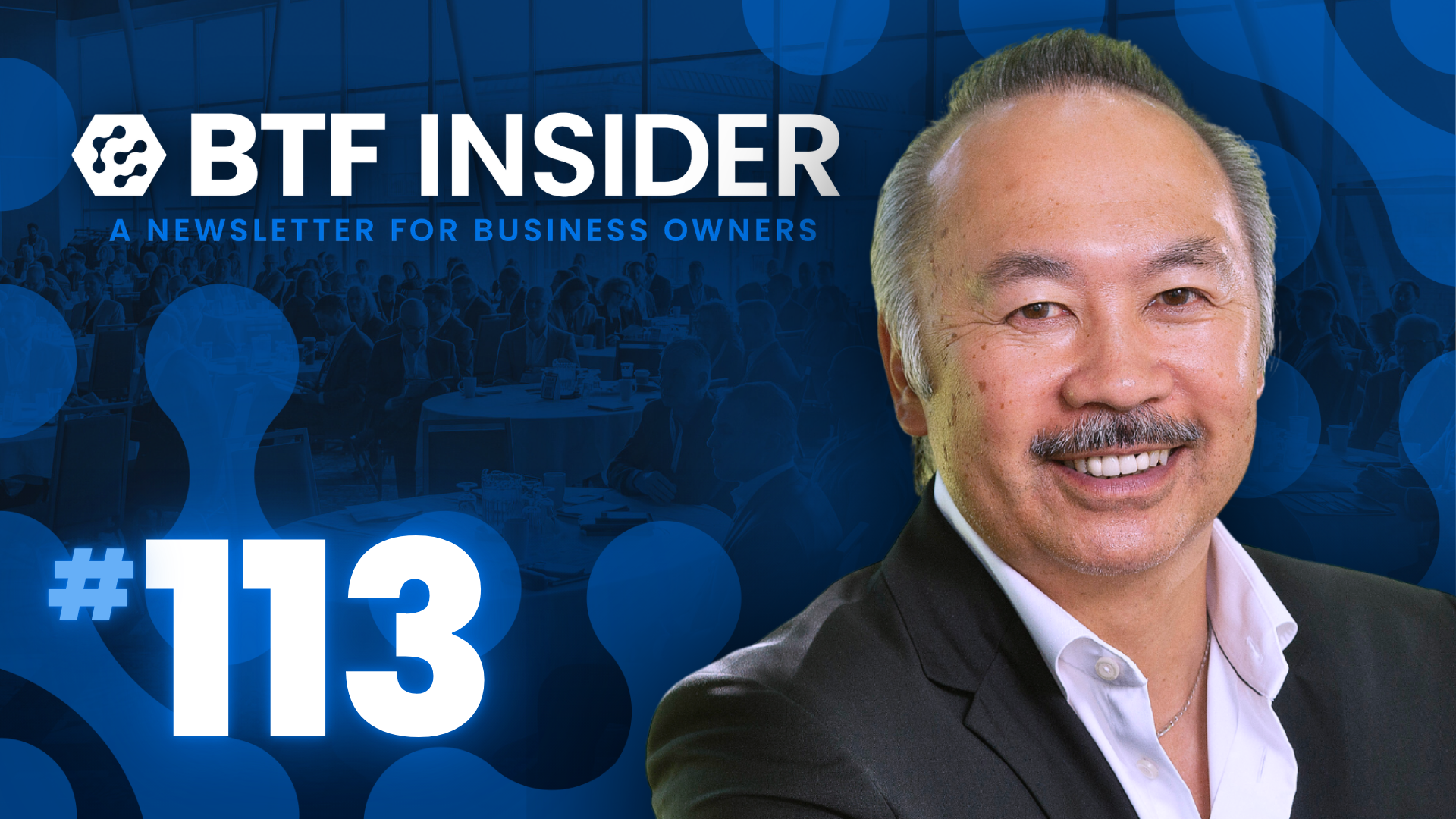
As Founder, President, Chief Executive Officer, and Chair of Westcap Mgt. Ltd., and currently serving as Conference Chair of BTF Saskatoon 2026, Grant brings a broad perspective to prairie business. He believes leaders here must widen their lens. The global economy is more interconnected than ever and a single political decision thousands of miles away can ripple directly into a Saskatchewan company.
Key Takeaways for Business Owners:
- Global instability now impacts local prairie businesses more directly than ever.
- Capital is mobile and objective, passion matters, but only within disciplined governance.
- Independent boards and succession planning are no longer optional at scale.
- Saskatchewan’s “food, fuel, and fertilizer” position it strategically in an unstable world.
- The long-term advantage belongs to organizations that build trust consistently over time.
Enjoy,
Mark

The Global Ripple Effect
Grant puts it plainly: the global economy now trickles down to local companies in real time.
Political instability, trade retaliation and policy shifts don’t stop at borders. A decision made in Washington or Beijing can affect a canola farmer in rural Saskatchewan. That farmer may delay purchasing equipment. The equipment dealer feels it. The restaurant down the street feels it and the effect compounds.
For Grant, prairie business owners must understand that “the global economy has a trickledown effect and impact on local companies.”
Ignoring global context is no longer an option, even for small and medium-sized enterprises.
Long-Term Value Requires Short-Term Discipline
In leading Westcap, Grant operates with a long-term institutional investor mindset.
Value is measured in years, not quarters, growth strategies require time to execute and real value creation rarely happens on a quarterly timeline.
But long-term thinking does not mean ignoring the present.
Institutional investors “take a long-term value approach,” yet in the short term they are constantly mitigating systemic risks that could derail that strategy.
That may mean sacrificing short-term results to protect long-term value.
For owners considering capital partnerships or eventual exits, this is an important distinction. Investors can be patient, but only when risk is understood, managed, and governed properly.
Discipline today protects optionality tomorrow.
Where Founders Often Hit The Wall
Founder-led companies carry energy, vision and drive but they often struggle at inflection points.
By their nature, many growing businesses lack independent boards. Sometimes they can’t afford experienced directors. More often, they are simply too close to daily execution to step back and assess alternative strategies.
Grant sees one recurring challenge: recognizing when the business has matured beyond the founder’s current leadership skill set.
There is still a role for the founder but sometimes a new level of growth requires new leadership capabilities. Letting go, even partially, is difficult but self-awareness, he believes, is often the difference between plateauing and scaling.
Capital Has No Emotion
Another misunderstanding he frequently encounters involves how owners perceive capital.
Capital is mobile. It is impersonal. It has choices.
Grant explains that capital weighs opportunities objectively against risk and return. It does not share the founder’s emotional attachment to the business. It evaluates alternatives globally.
Yet here’s the nuance: while capital itself is objective, it wants to see passion in leadership. Investors remove emotion from the numbers but they still want to invest behind conviction and discipline.
Understanding that distinction helps founders position themselves more effectively.
Trust Is Built Slowly
When asked what differentiates strong organizations, Grant points to consistency.
“Strong organisations take a long-term view of culture and integrity and relationships.”
They do not take shortcuts for short-term wins. They maintain cultural standards through good cycles and bad.
“If they do that consistently long-term, then eventually you’re known for a company with great culture, integrity and trusted. But that takes time and consistency.”
Reputation and trust are both strategic assets.
The Boardroom Has Changed
Grant has spent decades in private equity and governance, and he is clear: it has never been more complex to be a director.
Boards today must oversee cybersecurity risk, AI ethics and governance, global instability’s impact on supply chains and revenues, and ever-present reputational risk amplified by social media and activist shareholders.
These were not dominant board concerns fifteen or twenty years ago.
Directors now carry broader fiduciary responsibility, and founder-led businesses without independent governance expose themselves to blind spots they may not even recognize.
Succession Is Not Just Governance It’s Survival
Succession planning is often delayed because it feels uncomfortable.
Grant views it not only as a governance matter but as an operational risk.
“If you don’t do talent mapping of all your key executives, not just your CEO… the corporation therefore could be left rudderless and without leadership.”
Unexpected retirements, health events, or departures happen. Without preparation, momentum stalls quickly.
In a competitive talent market, mapping leadership depth is no longer optional.
Why Saskatchewan Matters
Amid global instability, Grant sees opportunity.
“In today’s world of this global instability that we’re seeing… the prairies and Saskatchewan in particular, we have the food, fuel, and fertiliser that the world needs for food and energy security.”
That reality positions Saskatchewan strategically. While headlines focus on volatility, the prairies produce essentials.
Energy. Agriculture. Fertilizer. Real assets with global demand.
For investors and operators alike, that foundation matters.
Making The Most Of BTF Saskatoon
As Chair of BTF Saskatoon, Grant wants attendees to think beyond the day itself.
He encourages owners to leave with a written list of “business arising” questions and follow-up conversations. Identify who to reconnect with and clarify what needs deeper work.
“This may be a one-day conference, but the follow-up and the learnings should go on forever.”
The event is the beginning, not the end.
Final Reflection
Grant Kook’s message to prairie business owners is not alarmist but instead it’s measured.
The world is more interconnected, governance is more complex, capital is more objective and boards carry heavier responsibility.
But Saskatchewan and the prairies sit at the center of global essentials.
The leaders who widen their perspective, strengthen governance, and build trust deliberately over time will be best positioned to thrive, not just locally, but globally.
And that conversation continues at BTF Saskatoon.