

Dear BTF Community,
Some business stories follow familiar arcs. George Armoyan’s does not.
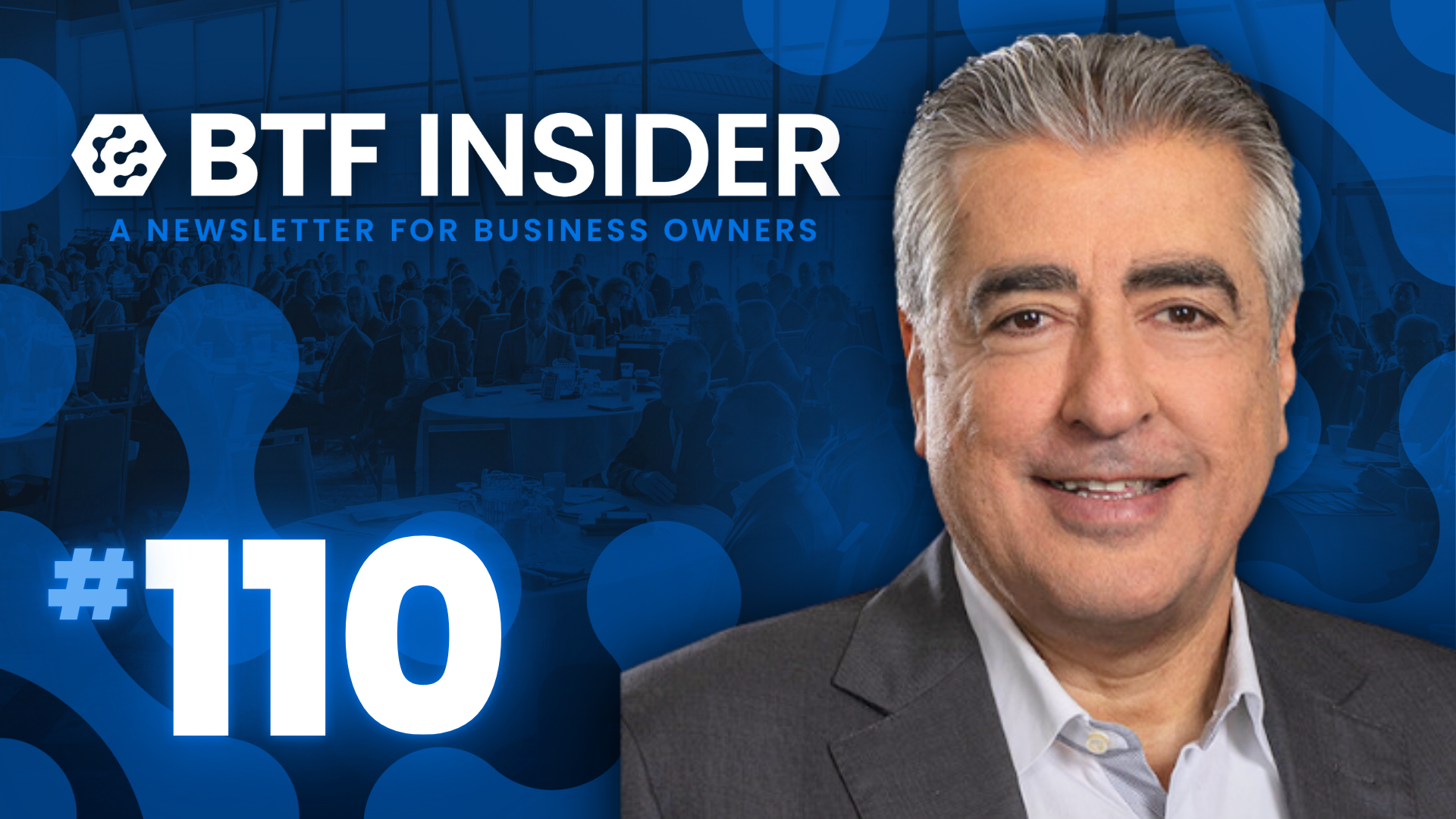
When George Armoyan, Executive Chairman of G2S2 Capital, sat down with Christine Pound for a BTF keynote conversation, he spoke less about growth curves and more about judgment. It was less about timing exits and more about surviving cycles.
From immigrating to Canada as a teenager to building one of the country’s largest private investment companies, George’s perspective has been shaped by volatility. Whether it was high interest rates and ailed bids or unpopular sectors and family expectations, his approach remained grounded, direct and unapologetically long term, which is exactly why it resonated with so many business owners in the room.
Key Takeaways for Business Owners:
- The outcome of a deal is often decided at the moment of purchase.
- Persistence matters more than polish or pedigree.
- Strong balance sheets create options when conditions tighten.
- Succession and partnerships work best when earned and governed objectively.
Enjoy,
Mark

Making The Deal On The Buy
George has always been clear about where value is created.
“I always wanted to make my deal when I buy, not when I sell.”
That idea sits at the centre of how he invests. He looks for assets others are tired of, cautious about or eager to exit. Not because it feels clever, but because price matters.
If the entry is right, time becomes an ally rather than a threat.
This thinking explains why his firm continues to invest in office real estate and oil and gas, sectors many investors are avoiding. In his view, discomfort is often where opportunity hides, especially for those with patience and capital.
Persistence Without Pretence
George doesn’t dress his story up, instead he’s an open when it comes to what he believes carried him forward.
“Losing is temporary. Giving up is permanent and I don’t give up at all. I’m not the brightest guy you ever met. I’m not the most articulate guy you met, but I’m the most persistent you’ll ever meet.”
That persistence was tested early in his career when he bid, and lost, twice on a public private partnership to build schools in Nova Scotia. Instead of walking away, he regrouped, strengthened his consortium and tried again. The third attempt succeeded. More importantly, it introduced him to capital markets in a way that reshaped his future path.
For owners facing setbacks, his point was simple. Failure is part of the process. What matters is whether you stay in it long enough to learn.
Investing Where Others Are Uncomfortable
George’s most successful investments often came during periods of deep uncertainty.
During the pandemic, he invested heavily in energy assets when prices collapsed and sentiment turned sharply negative. Years later, those decisions produced significant returns.
Today, he is applying the same lens to commercial real estate, particularly office buildings. Rather than viewing them as stranded assets, his firm is converting large towers in Montreal and Calgary into residential units.
“When there are disruptions, there’s great opportunities.”
The work is complex and slow. It requires capital, patience and a willingness to be early.
For George, that trade-off is familiar.
Balance Sheets Before Headlines
Throughout the conversation, George returned again and again to financial discipline.
“Equity is a pillow. Debt is a sword. What do you like to sleep on?”
Maintaining low leverage has allowed him to move when others could not, particularly during downturns. It has also shaped how he manages risk. He avoids overreacting to news cycles and focuses instead on what he can directly influence.
“I only worry about stuff that I can control.”
For business owners thinking about transition, this mindset is practical rather than philosophical. Clean balance sheets reduce pressure, improve negotiating positions and widen the range of possible outcomes.
Family, Succession, & Structure
George spoke candidly about succession planning within his own family. His two sons are involved in the business, but advancement is not automatic.
“I don’t believe in nepotism. They have to earn it.”
An independent board evaluates leadership readiness, separating family relationships from business decisions. It is a model rooted in accountability and long-term sustainability, one that many founders struggle to implement but later wish they had.
Walking Away When It No Longer Fits
George also reflected on his short involvement with the Ottawa Senators ownership group. The experience, he said, clarified more than it delivered.
“I learned two lessons. I’m not a very good second fiddle player. And the second thing is my ego is not as big as I thought.”
The venture did not align with his principles. It was driven by passion rather than profitability. Walking away was not about saving face but about staying consistent with how he builds and allocates capital.
A Grounded Definition Of Success
After decades of cycles, George’s view of success is measured and personal. It includes family, relationships and the ability to keep perspective when outcomes are uncertain.
“There are two types of friends. There’s real friends and deal friends. You want to keep your real friends.”
For the BTF community, his message was refreshingly direct; build patiently, buy carefully, protect your balance sheet and accept that persistence, more than timing or recognition, is what allows businesses to endure through transition.