
Dear BTF Community,
Successful transitions rarely begin when an owner decides to sell.
More often, they begin years earlier through decisions about leadership, succession and growth.
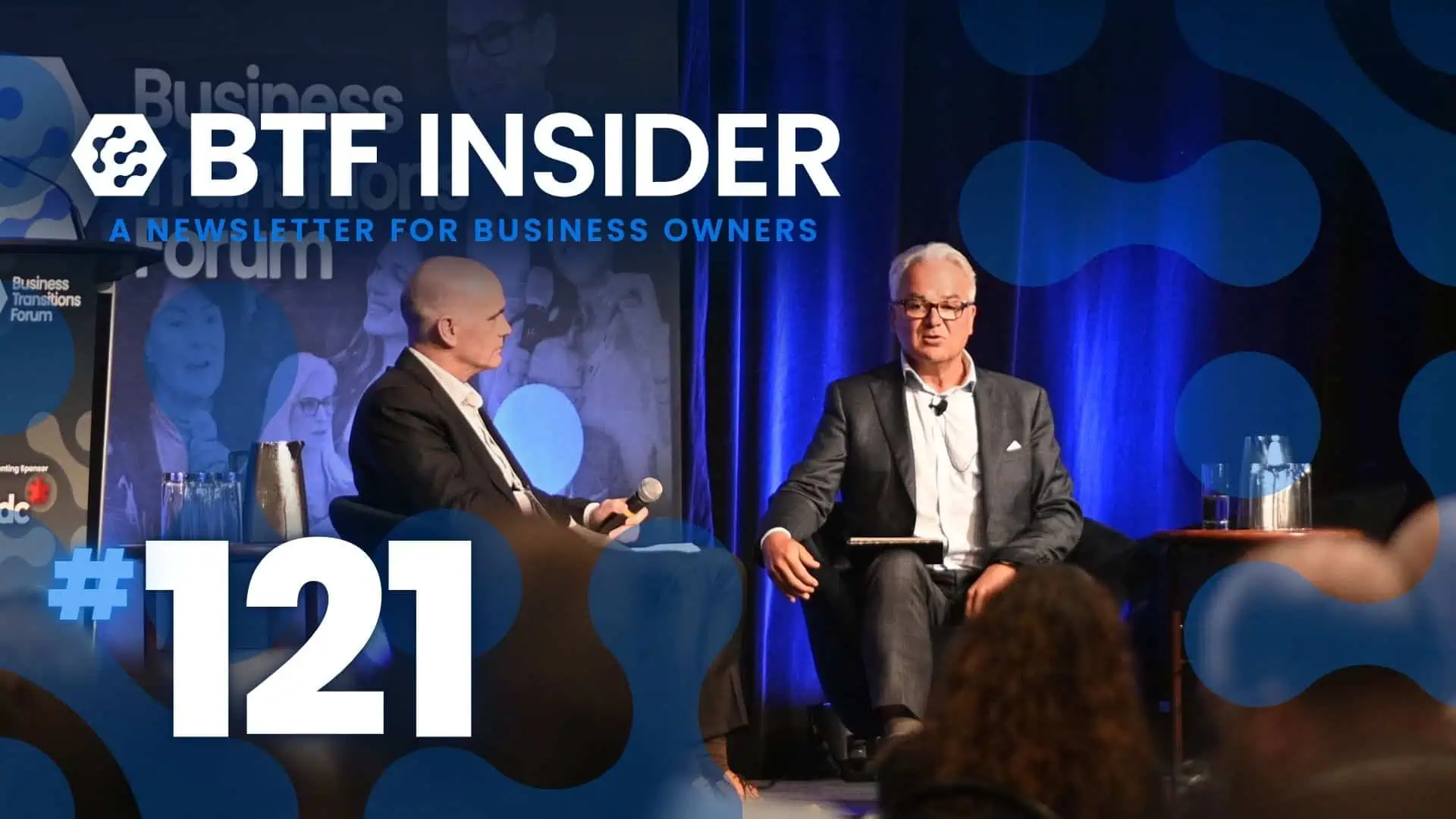
That was the case at GHY International. Long before partnering with SeaFort Capital, fourth-generation owner Rick Riess was preparing the business for a future that wouldn’t depend on him. Speaking at BTF Saskatoon 2026, GHY International CEO Chris Bachinski and SeaFort Capital President Rob Normandeau shared how those decisions ultimately positioned a 125-year-old company for its next chapter.
Key Takeaways for Business Owners:
- Succession planning creates options.
- Buyers invest in leadership teams, not just founders.
- Trust matters more than perfection during due diligence.
Enjoy,
Mark

When SeaFort Capital began evaluating opportunities in the customs brokerage industry, they found no shortage of successful businesses.
What they found far less often were businesses that had already prepared themselves for growth beyond the founder.
As Rob Normandeau explained:
“As a private equity investor, one of the things you look for is a team that you can partner with for the next five to 10 to 15 years to build up.”
GHY International stood out because the succession work had already been done.
Years before a transaction was ever discussed, Rick Riess had invested in technology, strengthened the leadership team and brought in a CEO to run the business.
“He had invested in technology so the business was ready for growth. It most importantly brought in someone to run the business and he’d done that eight years before we had a conversation.”
That changed the conversation entirely.
Rather than looking for a complete exit, Rick was looking for a partner who could help take the business further.
“I’m looking for a partial exit. I love this business. I love the people. I want to stay involved with some equity outside, but I want a new owner to provide capital and support.”
For SeaFort, that was exactly the type of opportunity they were looking for.
The leadership team was in place, the business had a growth strategy and the next chapter had already started.
Trust Builds Better Deals
The transaction came together during a period of uncertainty.
Tariff discussions and political rhetoric created concerns for a company operating at the centre of cross-border trade. Rather than avoiding those conversations, the team addressed them directly.
Chris recalled raising those concerns during the process.
“Here’s what we’re worried about. It’s all rhetoric right now, talking and tweeting, but it could make a major impact on the business.”
The response was not to ignore the risk.
Instead, both sides worked through it together.
“If you want to get a price that’s optimal, you have to share some of that risk.”
That approach carried through the entire diligence process.
Rob noted that what stood out most was not a perfect business.
It was the openness of the leadership team.
“Throughout the due diligence process we got the sense that we know that Chris and the team were telling us the truth.”
He followed that observation with a point many owners will recognize.
“There’s no perfect business. There were some things that weren’t perfect about this business. But every question that we asked, the response was let’s talk about how we would address it.”
Buyers rarely expect perfection. What they want is confidence that leadership understands the issues and has a plan to address them.

Ownership Creates Alignment
One of the more unusual aspects of the transaction involved the leadership team.
As the deal took shape, Rick wanted key leaders to participate in the future success of the business.
Rather than simply rewarding them for past performance, he wanted them invested in what came next.
“Rick rewarded the senior leadership team that would be with the company post-acquisition with paying for the shares.”
Seven members of the leadership team became shareholders.
For Chris, the impact was immediate.
“There’s seven of us that all got shares from the proceeds and sale and it’s really helped us be energized seeing long term.”
The move aligned everyone around the same goal: building value over the long term rather than focusing solely on short-term results.
A Transition, Not A Departure
One of the most revealing moments of the session came when Chris described how leadership transitioned after the deal.
There was no dramatic handoff.
There was trust built over time.
When Chris first joined the company, he and Rick met every Thursday.
“Every Thursday he had one question. One to 10, how do you feel?”
Those conversations became the foundation for the transition. As confidence grew, Rick became less involved in day-to-day decisions while remaining available as a sounding board and strategic advisor.
“He let us run the business.”
Today, Rick remains Chairman of the Board and continues to stay connected to the company he spent decades building.
The transition worked because it was never treated as a single event. It was a process that unfolded over years.
Final Reflection
The story of GHY International could easily be told as a successful private equity transaction.
The more useful lesson is what happened before the deal.
The succession plan came first. The leadership team came first. The investments in technology came first. Trust was built long before due diligence began.
By the time SeaFort Capital entered the picture, the business was already prepared for its next chapter.
For owners thinking about growth, succession, or an eventual transition, that may be the most valuable takeaway of all. The strongest transitions are rarely created during a transaction. More often, they are the result of decisions made years earlier.