
Dear BTF Community,
Some industries force clarity.
Energy is one of them.
Cycles move quickly, capital is unforgiving and decisions have long consequences. For entrepreneurs operating in that environment, the margin for error is smaller and the feedback is immediate.
That’s what makes the lessons transferable.
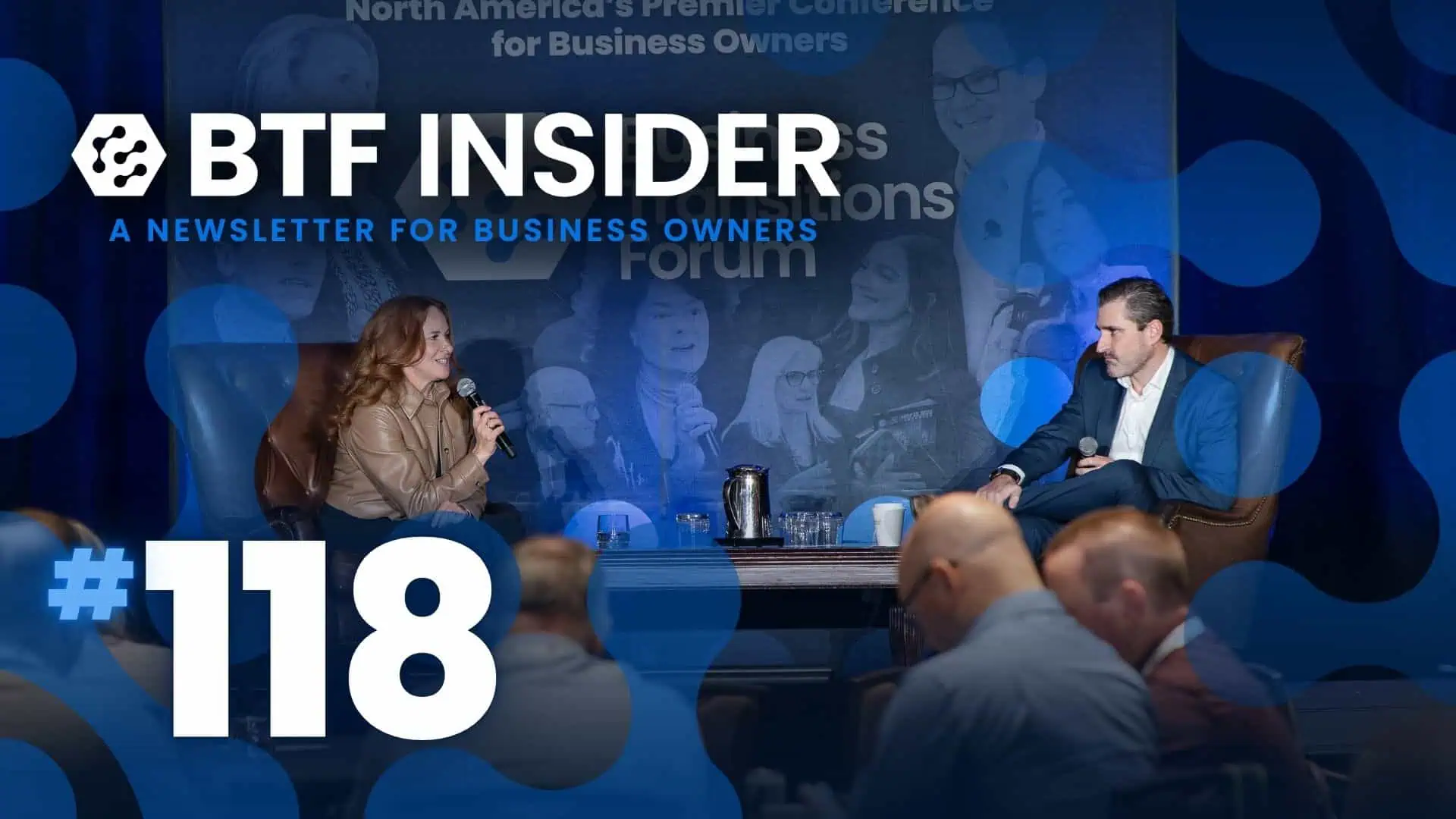
In a recent conversation at BTF Alberta between Brenda Slauko of BDC and Joel Vorra, former President of Tidewater Renewables, the discussion centered on the energy transition.
What emerged wasn’t just a view on energy but a set of principles that apply to any business navigating change, growth or acquisition.
Key Takeaways for Business Owners:
- Flexibility is determined by how your business is built, not how it’s planned.
- Customer relationships and management continuity often matter more than assets.
- Simple metrics, understood deeply, drive better decisions in complex environments.
Enjoy,
Mark

Strategy Depends on Where Your Industry Sits
One of the clearest insights from Joel’s experience is that not all industries behave the same way.
“Oil and gas is its own thing… probably the biggest difference moving into lumber is that there are still a lot of small providers and manufacturers, like the old days in oil and gas.”
That distinction matters when thinking about growth.
In highly consolidated industries, strategy often revolves around optimization and efficiency. In fragmented sectors, the opportunity looks different. It becomes about aggregation, relationships and building scale over time.
The mistake many owners make is applying the wrong playbook to the wrong stage.
Capital Shapes How You Can Respond
Another theme that carries across industries is how capital intensity affects decision making.
“If you have a big refinery or a gas plant, there’s a tonne of capital that’s gone in… it needs to run. If you have smaller assets, you’ve got more variable costs and you can pivot pretty quickly.”
This is about more than just finance, it’s about flexibility.
Businesses built around heavy fixed infrastructure are harder to adjust when conditions shift. Those with more variable cost structures can respond faster, whether that means scaling up or pulling back.
For owners, the question becomes practical. How quickly can your business adapt if conditions change?
Pricing Power Is Often Overlooked
In commodity-driven environments, pricing isn’t always controllable. That’s what makes it valuable when it is.
“There’s also pricing power… you can adjust your prices pretty quickly.”
The ability to move pricing, even slightly, changes the economics of a business. It creates room to respond rather than react. In many cases, this is tied less to product and more to positioning, relationships and differentiation.

Preparing For What Could Go Wrong
Risk management is often framed around protection but Joel approaches it differently.
“Gas went to zero… crude went to zero… we saw both.”
Rather than hoping those scenarios wouldn’t occur, his team structured their portfolio to benefit from them.
“Gas storage facilities become a benefit… people are paying you to store it.”
The principle is simple but rarely applied. Identify what would cause the most damage, then look for ways to offset or even benefit from it.
The Real Moat Isn’t Always Obvious
When evaluating businesses, attention often goes to assets or technology.
Joel points somewhere else.
“When you have so many different customers, that’s a bit of the moat… you’re acquiring all these relationships.”
In fragmented industries, the barrier to entry isn’t always technical but rather it’s operational.
Customer relationships, logistics and trust take time to build and they’re difficult to replicate quickly.
This shifts how acquisitions should be evaluated. The value is often embedded in the network, not just the infrastructure.
Why People Decide The Outcome
In owner-managed businesses, continuity is not a detail.
It’s central.
“If they said they’re out in 90 days… that’s probably a no-go.”
The knowledge held by an owner operator cannot always be replaced quickly. Without a transition, value can erode faster than expected.
What happens after a deal closes is just as important.
“You have to be present and get to know the people… there’s no formula.”
The early phase is about understanding and trying to impose alignment from a distance rarely works because integration requires time, attention and trust.

The Simplicity Behind Complex Businesses
Despite operating in complex environments, Joel returns to a simple framework.
“If you boil it down… it’s volume and price.”
That simplicity is powerful.
Regardless of industry, understanding what drives volume and what influences pricing allows leaders to make clearer decisions.
It creates focus.
“Knowing that inside out… daily reporting… that’s critical.”
The more complex the environment, the more important it becomes to anchor decisions in a few core variables.
Planning Versus Being Ready
Strategic planning has its place, but Joel draws a clear distinction.
“Spend the time being nimble and ready rather than setting up for a certain goal in a certain timeframe.”
Conditions change and timelines shift.
Businesses that are overly structured around a fixed outcome often struggle to adjust when that outcome moves.
Flexibility isn’t the absence of planning but the ability to adapt when plans inevitably change.
What This Means For Alberta Entrepreneurs
The broader context is also evolving.
“Financing is coming back… there’s maybe a little more availability than there was over the last five years.”
After a period where capital was constrained, conditions are beginning to shift. That doesn’t remove discipline but it does create new opportunities for those who are prepared.
The same principles apply regardless of sector. Understand your numbers, know your risks, and build with flexibility in mind.
Final Reflection
The energy transition is often framed as a sector-specific shift.
What Joel Vorra’s experience highlights is something broader.
Businesses that endure through change share common traits. They understand where they sit within their industry, structure themselves to adapt and focus on the elements they can control.
The specifics may differ across sectors.
The principles don’t.